
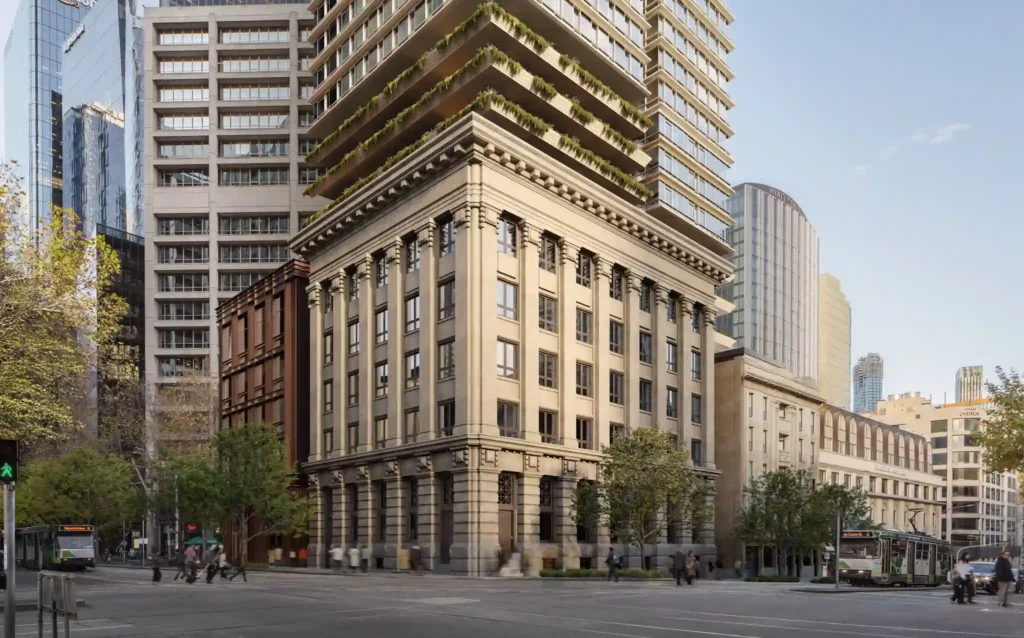
Too often, heritage buildings become the podium for a contemporary tower. At 623 Collins, Sterling Global challenged its design team to reverse that process.
The brief to Plus Studio was deliberately simple: “Don’t design around the heritage. Design from it.” It became the philosophy behind a project that draws inspiration not only from two landmark heritage buildings, but from Collins Street itself, a street layered with architectural history and civic significance.
(more…)
August 18, 2026
How Sterling Global designed 623 Collins from Melbourne’s history
That philosophy has shaped one of Melbourne CBD’s most considered residential projects, where the 1924 State Savings Bank and neighbouring Batman’s Hill Hotel have become the architectural foundation for 623 Collins rather than remnants preserved beneath a new development.
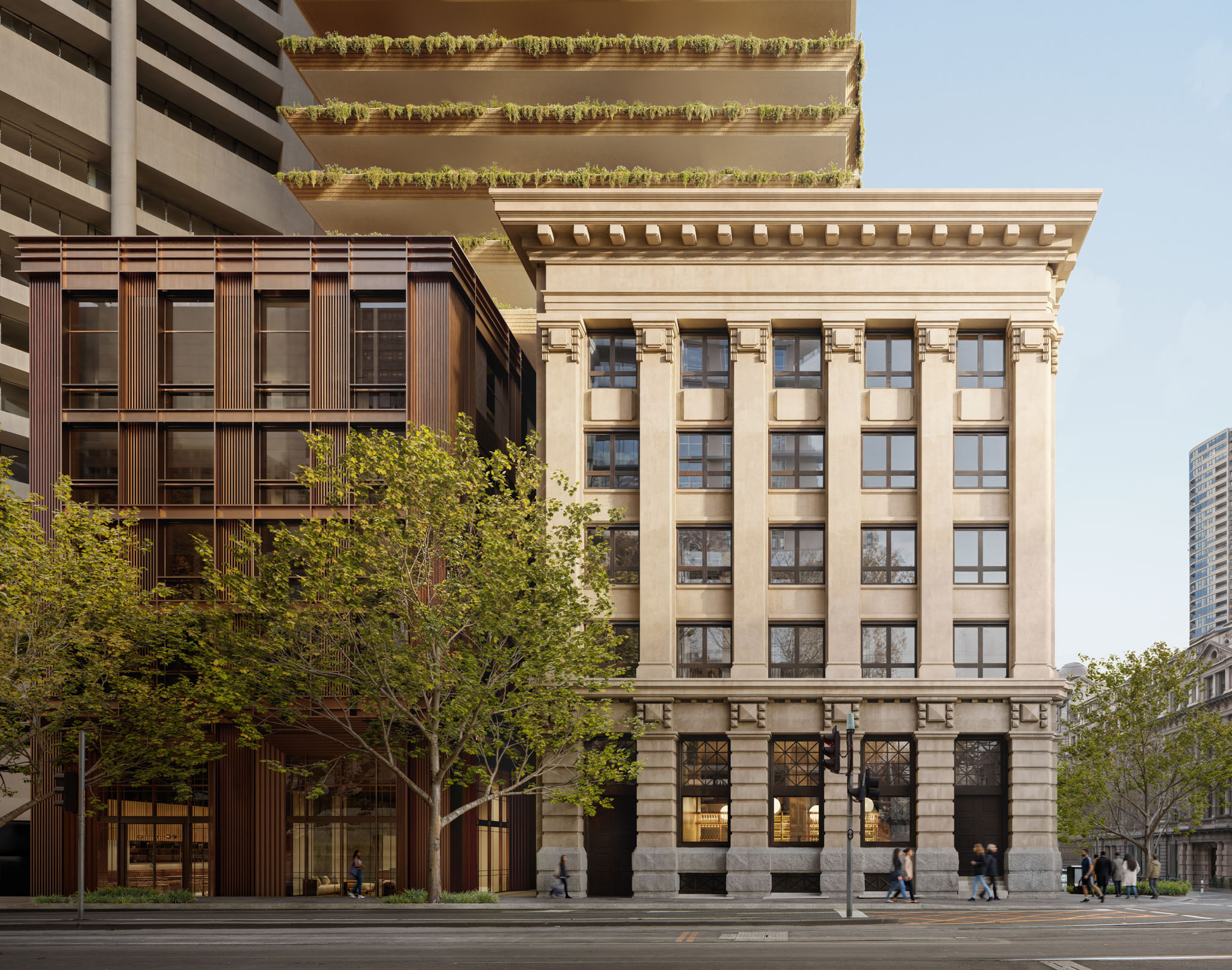
Rather than approaching the site as a blank canvas, Sterling Global saw the existing buildings as the beginning of the story.
“Sites like this rarely become available,” the developer said.
“623 Collins wasn’t simply an opportunity to develop a prominent CBD site. It was an opportunity to restore and reimagine one of Melbourne’s important heritage landmarks while contributing to the continued evolution of Collins Street. For us, the existing buildings weren’t constraints. They were the beginning of the story.”
Instead of mimicking the ornate heritage architecture, Plus Studio studied the proportions, rhythm and craftsmanship of the original buildings before translating those characteristics into a contemporary 42-storey tower.
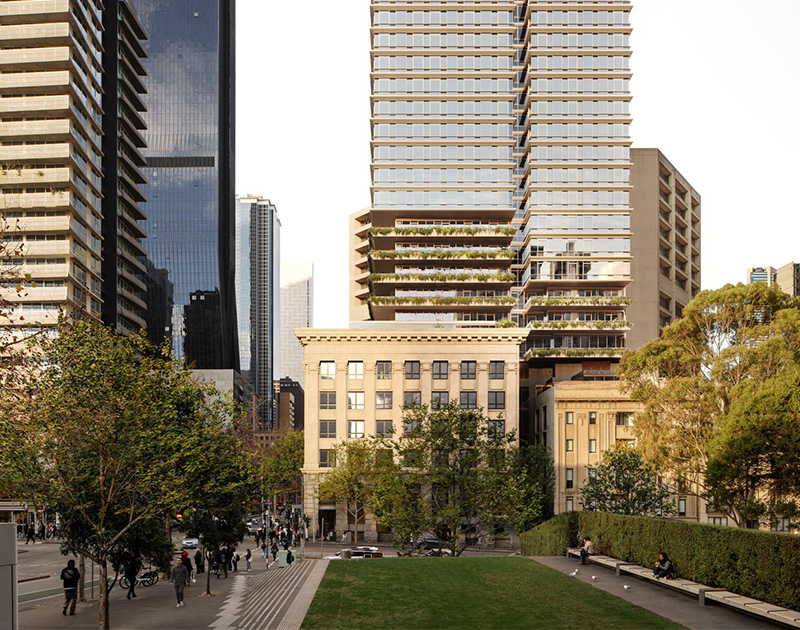
“The brief challenged us to create a contemporary landmark that respected Melbourne’s architectural history without becoming nostalgic,” Plus Studio said.
“Rather than mimicking heritage, we sought to understand its proportions, rhythm and material language before translating those qualities into a distinctly contemporary architectural expression.”
The practice says the State Savings Bank and Batman’s Hill Hotel became the project’s primary source of inspiration, allowing the heritage buildings and contemporary architecture to exist “in conversation rather than contrast.” Generous planted terraces further soften the transition between old and new, creating elevated green spaces while reinforcing the dialogue between the restored podium and the contemporary tower.
That dialogue continues throughout the interiors, where Melbourne designer Fiona Lynch developed a material palette inspired by the idea of alchemy, balancing contrasting materials that reference both the Neo-Grec detailing of the original bank and contemporary urban living. The result is a series of spaces that feel timeless rather than trend-driven.
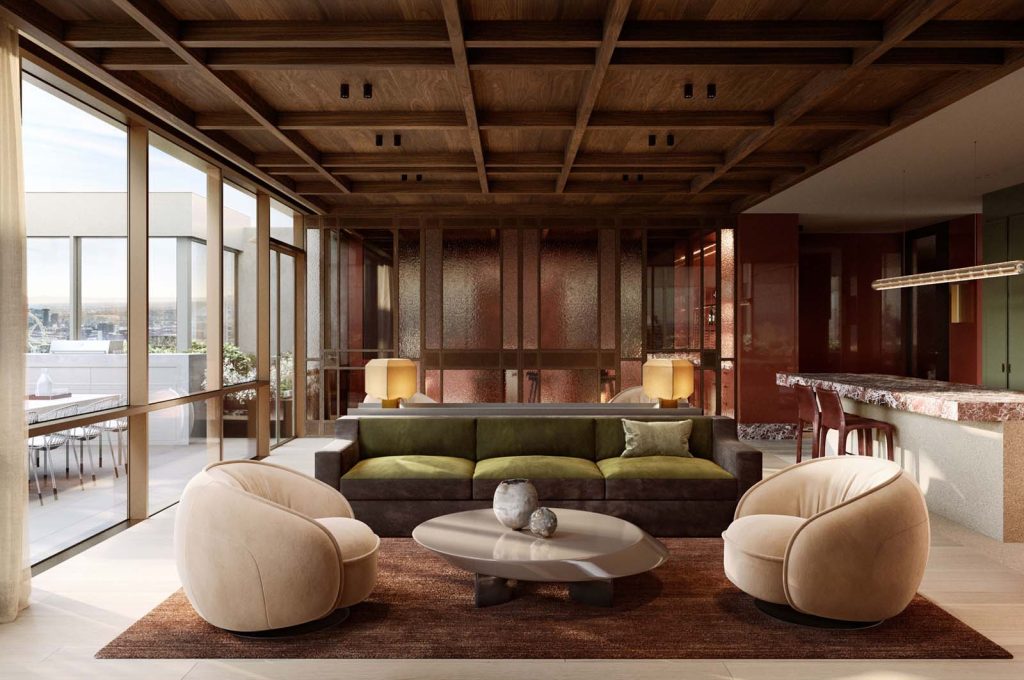
The project will deliver 316 residences across four collections, Heirloom, Signature, Reserve and the Penthouse Collection, with each responding differently to its position within the building, from the restored heritage podium through to the upper levels of the tower. The Heirloom Residences retain defining heritage elements including original heritage windows, generous proportions and high ceilings, while the tower introduces contemporary homes with expansive layouts and elevated views.
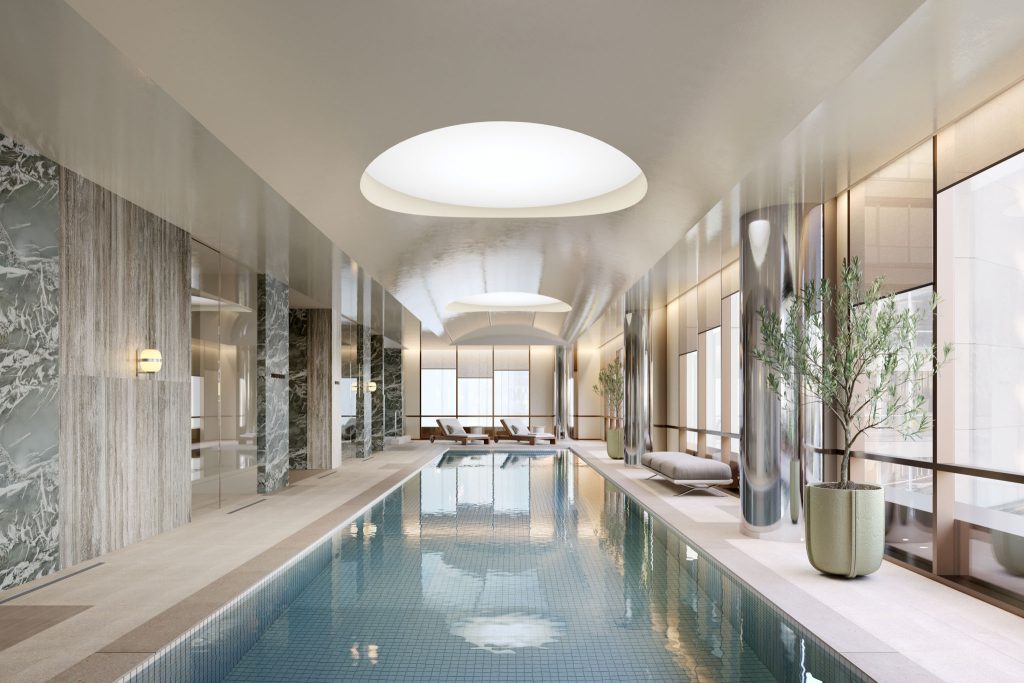
Amenities have likewise been designed to support long-term city living rather than short-stay convenience. Residents will have access to concierge services, wellness facilities including a pool, cold plunge, sauna, steam room and gym, alongside private lounges, entertaining spaces and dedicated resident clubs.
Sterling Global says that approach is resonating with buyers seeking permanence rather than novelty.
According to the sales team, purchasers are looking for enduring architecture, generous floorplans, heritage character and long-term value, with many commenting that 623 Collins “doesn’t feel like another apartment development” because of the way the architecture has been curated around the site’s history.
Situated on the prominent corner of Collins and Spencer streets, the project occupies one of Melbourne’s most recognisable gateway sites, marking the western entrance to the city’s best-known street. For Sterling Global, it also reflects a broader shift in city-making.
“Rather than maximising development yield, the project embraces adaptive reuse as a design philosophy, allowing heritage to inform architecture, interiors and the overall resident experience,” the developer said.
“The result is a building that feels uniquely connected to Melbourne.”
Published at Apartments.com.au, Aug 14, 2026.
Archive

© 2026 Sterling Global Privacy Policy Due Diligence
Website by Equality
A Sterling Global Development
Renders are artist impression